Showing posts with label prison. Show all posts

Thursday, December 11, 2014

Mass Incarceration on Trial


Jonathan Simon
Mass Incarceration on Trial

The New Press, 2014

America worries about its citizens. America wants to reduce crime, separating those who have comitted crime from those who are victims or can become victims. The method of the separation the US have chosen is imprisonment everyone who poses even a slightest threat to society.

Mass incarceration has become panacea for all crime related illnesses in America. Prisons lose their rehabilitation status, turning into human warehouses storing people as objects that have lost all their value for the government.

Jonathan Simon in his study of mass incarceration writes that the society and then government views on crime and crime prevention toward incapacitation changed their views on prisons significantly only recently. On an example of California, Simon shows how a state with moderately small amount of prisons during only two decades had made a big step forward to a prison state, where “more than twenty new prisons [were built] during 1980s and 1990s”. The state abandoned all rehabilitation programs for prisoners, adapted new harsh sentensing laws, made parole impossible, with the only solution in mind – incarceration. The newly builded prisons couldn’t catch up with the number of newly convicted, who received long sentences even for smaller crimes. It had led to overcrowding in prisons, that itself had become the source of another issue for prison inmates. The conditions of their imprisonment worsened. While the official theory was that prisons are safe for those who are unsafe to society, in real life prisoners suffered from absence of elemental medical treatment. The prisons became places of torture tucked away from our eyes.

Examining new trial cases, regarding mass incarceration and prisons conditions unfeat for any human, especially those who suffer from mental and chronic illnesses, Simon find the reasons as to why California and the rest of America found this brutal and most unhuman way to treat persons who were found guilty of comitting a crime. I avoided in the previous sentence the notion that state found a new way to prevent crime by building new prisons. In this book Simon (and he’s not the first) argues that it’s been established already that there is no direct relevance between crime rate and incarceration rate.

Thus we should regard the reasons that caused and started mass incarceration across USA. In one of the strongest arguments Simon explains how society viewed an ordinary criminal, the two most common types being black violent revolutioner and white serial killer hunting in suburbs. It seemed there were no other way to be saved from crime, other than to place every person who committed any crime possible in prison for the longest term possible. Simon convincingly argues that it is the government itself who sold the society this idea about incorrigable criminals, and then after society in fear changed its views toward the need of a harsher punishment, the government simply used society’s approval of mass incarceration.

Building prisons is the simplest way out, also being not the cheapest one. Mass incarceration requires minimum brain work, as prisoners are treated as things that are needed to be placed inside cells, and then forget about them, for life if possible. Rehabilitation, working with people, treating human beings with dignity they’re entitled to, this is a hard work. Government “treat(s) members of the human race as nonhumans, as objects to be toyed with and discarded”. For a few decades government was focused on the materialistic side of the problem, being interested in contruction, safety inside of prisons for prison officials, supermax blocks and whole prisons.

Simon slightly touches one, as it seems for me, important point: the new prisons were considered as safe places for work of prison officials in the first place, and only in the second as a safe place for prisoners. Prison officials viewed prisoners as dangerous species, animals who deserved to be treated as such. Therefore all in prisons was made so that prison officials could feel and work safely inside prison walls.

While completely forgotten and deprived of decent medical treatment and opportunities for education, communication and rehabilitation, prisoners struggled all these years. The prison population grew, the average age of prisoners raised, the suicide rate among prisoners high as ever, and only recent litigation cases drew attention of media and social scientists to the issue of total incapacitation.

Simon delves into three most important cases, where whole population of several Califotnia prisons demanded the right to medical treatment and human conditions in prisons. During these cases, it was found that mass incarceration leads to a violation of Eighth Amendment. The Brown vs. Plaza court’s recommendations on reducing prison population is only a start. The three cases examined in this book initiated the end of mass incarceration. The government still fights this decision, yet there were some progress already made.

Mass Incarceration on Trial is a superb study of American penal system, its issues and the possible ways to solve them. It a book for prison freaks and for those who studies law.

Thursday, June 12, 2014

Us Conductors


Sean Michaels
Us Conductors

Tin House, 2014

This novel is a fictional biography of Leon Theremin, the Soviet inventor of the musical instrument theremin, and a number of other inventions. The novel consists of two parts – Theremin’s memoirs about two periods of his life, both parts, coincidentally, written in captivity. The first part was written in 1938 during the return (forced) of Theremin from the United States back to the USSR, and the second - in the Soviet sharashka where during the war and postwar years, along with other scientists, Theremin worked for the NKVD. Although Theremin lived a long life (he died only in 1993), this novel covers only a part of his life, mostly related to his beloved Clara Reisenberg.

Success and fame comes to Theremin after the First World War. A young physicist, he worked in St. Petersburg on multiple devices, and then created an unusual and original musical instrument theremin, a complex design that responds to human movement and make sounds. After some practice you can perform classical music on this instrument. The instrument makes a huge impression on everyone, Theremin is even invited to Lenin, where he performs several musical pieces. The scientist and inventor begins to tour within the Soviet Union, gradually perfecting the instrument and doing other developments (including the prototype of a modern TV). In 1928 the scientist moves to the USA to continue his work there, reinforcing his glory and bringing money to the Soviet Union.

Very strange thing this novel is. If you do not pay attention to the writer's name, you can assume that the book was written by a scientist-ex-Gular prisoner, who after the Gulag escaped to the United States, there kearned the language, and wrote this brilliant novel based on other people's stories and the official biography of Theremin. But this novel, who would have though, was written by an American journalist, and not just a journalist, but that man of almost nonexistent profession – a music critic. For a non-immigrant from the USSR, Sean Michaels has a phenomenal eye for detail. Typically, an aspiring author (and for Michaels this is the debut novel) feels very shaky on unfamiliar territory. The book covers very different societies: the birth of the USSR, and jazzy New York, and Kolyma, and closed scientific bureau. And there was a good chance that the American author could slip somewhere. But Michaels hasn’t lost a step.

Of course, someone will be outraged, saying that there are many assumptions in the book. Theremin didn’t know Kung Fu, and he didn’t kill an FBI agent, and much more other things here are distorted and added. However, the reader should understand that Us Conductors is, in the first place, a novel, an invention, as it is called by Michaels, only based on the life of the scientist and inventor. Facts can be distorted, but overall details - there is no falsehood.

There are small mistakes, though. For example, back in the early 30's one of the scientist’s friends calls him «rocket scientist», although the term had not yet appeared at that time. "Black Marusyas" here are called "Black Marias." Michaels politely calls prison snitches informers. Growing up in Russia, Theremin doesn’t yet know what “brusnika” is. In a conversation with the prison authorities Theremin uses as a measure of the length a mile and his superiors don’t correct him.

But all this is stuff that English-speaking readers will not notice. Though the story underlying the novel hardly will leave anyone indifferent. From the outset, the narrator chooses detached tone to his narrative. Yes, he is also the main protagonist, but he seemed to flow through life. He is a talented, successful, sociable, honest, but at the same time gutless and too naive. Having found his love, Theremin doesn’t take actions to win Clara. Generally relationships with women scientists put a stain on the inventor. He married Katya by stupidity, he was young, he says, but almost immediately and broke up with her, not even broke up, just forgot. He tried to win Clara, but it was too late (although he has not lost love for her). He married a black dancer for mercenary motives, and left her, though not by choice.

A lack of will power of the protagonist can be traced throughout the entire novel. After losing his main love, Theremin lost interest in life. Perhaps because of that he relatively easy suffered expulsion, arrest, jail, camp, sharashka. He has survived because of love - and his genius. It is impossible not to admire Theremin: he made many inventions, but he was not particularly proud of them and didn’t have patents. In the United States other people had patents, and his inventions in sharashka was kept as top secret.

For all his life the hero of the novel carried loyalty not only to Clara Reisenberg, but also to Lenin. Meeting with the leader left a mark on the mind of the scientist. For the reader the memories of Lenin may seem ridiculous, but in them we can see all sincerity and inner purity of Theremin. Characteristically, in his memoirs Theremin does not condemn the Soviet government, neither Beria or Stalin. Rather, he remains loyal to the Soviet regime, even after Kolyma. For him, the Soviet Union is not Stalin, it’s still Lenin.

Michaels writes equally captivating about music, camp labor, dancing under the jukebox, testing of new inventions. Us Conductors captures the essence of the XX century through the tragic fate of one scientist. Not every year we read debut novels of such power and brilliancy.

Tuesday, January 14, 2014

The Baddest Ass


Anthony Neil Smith
The Baddest Ass

Blasted Heath, 2013

In the third novel of the series the (anti)hero of the previews books Billy Lafitte is in jail in North Dakota, where he is serving a life sentence. There is no peace for Billy there: other inmates consider him a traitor, and now and then attempt on his life. Billy’s enemies from the outside also want him dead: FBI agent Rome, whose life Billy spoiled earlier, and Colleen Hartle, whose boyfriend died in accident because of Billy. They order the murder of Billy and - for a fee - the leader of blacks Ri’Chess and Head Prison Guard Garner accept to eliminate Billy. According to their plan, the death of Billy will happen during a blizzard. Due to bad weather in the prison electricity will be shut down for a short period of time, and at that time one of the prisoners will kill Billy. But it so happens that the planned murder coincides with the visit to the prison of Lafitte’s son accompanied by his grandmother (Billy’s mother-in-law) and Colleen, who is offering for a hit not only money but her own body, as well. The situation gets out of control, and a quick hit grows into something big.

Good prison novels are always in short supply. The Baddest Ass is inherently a prison novel, but is it a good one? Not really. The novel is intriguing while it tells about everyday life behind bars, until the moment when the riot actually begins. And this is only a quarter of the book. When the most interesting only should take shape, the novel suddenly loses all its touch. Two-thirds of The Baddest Ass is a pulp-style fighting, with hypertrophied villains and sluggish action. Smith, who is writing clever and sophisticatedly plotted books, disappoints with this one.

Smith switches between the characters, but he loses touch with his own creations. Voices of two female characters fill with fake notes. Pious old lady suddenly mentions men’s «balls», and Colleen suddenly overflows with a sense of love for Billy’s mother-in-law and his son, whom she hasn’t ever seen before that. What is worst of all: two characters who have had the greatest potential, whose minds were interesting to be in, are out of the game immediately after the first quarter of the book.

If I should continue with the flaws, I will mention that it’s hard to believe that Billy would end up in a conventional high-security prison, given that he likely had been convicted of terrorism. It also is unlikely that other inmates would despise and hate Lafitte because he is a traitor. I think these guys inside don’t really care.

I highly valued the two previous novels about Lafitte, they were outstanding books. This is a hit-and-miss, it’s really baddest. Looking forward to next books when Smith, hopefully, will return to the form.

Friday, September 20, 2013

Half of Paradise


James Lee Burke

Half of Paradise

Hyperion, 2011 (ebook)
(originally published in 1965)

A part of Forgotten Books Friday

Three young men in Louisiana of early 60s are experiencing the difficulties of life and trying to find their place in life. Avery Broussard returned to his father's farm after work on oil wells. Father soon for debt was evicted, the farm was sold by auction, the father then dies immediately, and Avery instead of agriculture switches to the moonshine whiskey trade.

J.P. Winfield comes from the countryside to the city and spends the last five dollars to participate in the talent competition. A talented blues singer, Winfield gets a job at the club, and then even goes on a tour. Success comes to Winfield with addiction: first pills "for pleasure", and then cocaine under the tongue.

Black Toussaint Boudreaux worked as a longshoreman, moonlighting as a part-time boxer. His last fight ends with a victory, but the price of victory is a broken arm. Injury leads to loss of work (and part-time work), wandering, and then to a prison.

The debut novel by James Lee Burke's written in the not too widespread genre of "hard life of hard men". Hardships and difficulties stick to the three characters of the novel, which brings together youth, lack of education and poverty. Despite the "paradise" title , the novel tells of the circles of hell, whose name is Louisiana. Even when one of the characters starts to climb, do not assure yourself - he will drop even lower than he had been.

All three heroes, definitely clean and decent people, eventually break down. Reasons for this are drugs and alcohol, but these are external causes, the same major weakness of all three characters is their assertiveness. They rush forward not seeing that the abyss is under their feet.

Plot-wise Burke tightly packed in his novel several sub-genres: prose of the South changes to the prison novel, then to out-of-prison novel, and then to the confession of cocaine user. The central part of the novel takes place in prison: in labor camp Broussard and Boudreaux will meet. I can quote prison dialogues for hours:

"This tastes like Evans washed his socks in it," he said.

"Drink it or go dry," the trusty said.

"Fuck you, ass kisser."

"Maybe you don't get no water the rest of the day," the trusty said.

"And maybe you'll get your fucking throat slit while you're asleep," Billy Jo said.

The trusty put the lid back on the barrel. "That's all your drinking water for today."

"Let me have a drink. I'm like cotton inside, "Daddy Claxton said. ...

"You'll have the runs for a week," Billy Jo said.

"His tongue won't be blistering by one o'clock," the trusty said.

"Screw you, punk."

The dipper was passed around the gang. The trusty replaced it and the lid when they had finished.

"There's a freshwater spring over in them trees," he said. "I'm going over directly and have a drink."

"You mean there's clean water over yonder?" Jeffry said.

"It's coming right out of some rocks."

"Go fill up the water barrel. We'll pay you for it, "he said.

"What with?"

"I got three bucks hid in the barracks."

"That ain't enough."

"The sonofabitch is riding you," Billy Jo said. "Don't pay him no mind."

"It's coming out of some rocks with moss on them. '

"I believe him," Jeffry said. "This is hill country There's always springs where there's hills."

"You're in barracks two, ain't you?" Billy Jo said to the trusty. "Well, I got buddies in there, so you better forget about sleeping for the next few nights unless you want to get operated on. It takes one swipe with a knife and your whoring days are over. Now get the fuck out of here, punk. "

"It's a long day without no water," the trusty said and lifted the barrel and moved down the ditch.


Half of Paradise makes us to remember of what used to be old school prison and novels about them: no gangbangers, no Mexican gangs, no Aryans.

Burke is a confident narrator for a debutant, and it is sad that he sometimes missteps. The novel is written in the third person, but such that almost the first. The reader knows only what the character knows. But Burke sometimes adds a few sentences of what the character can not know: dialogues of the secondary characters, when the main character is already out of the room, or the actions of the characters when the main character is blindfolded.

The title of the novel could be interpreted in the sense that for a novel as this you can give a half of paradise.

Monday, July 15, 2013

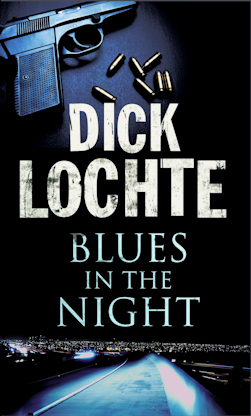
Blues in the Night


Dick Lochte
Blues in the Night

Severn House, 2012

After his release from prison, Dave Mason nicknamed Mace lives in his father's house in the swamps of Louisiana, unless he gets a call from Los Angeles from his an old acquaintance, crime boss Paulie Lacotta. Mace is to partnered up with Wylie, a relative of Lacotta, and together with an inexperienced partner Mace should watch Angela, the former girlfriend of Paulie, which seems to take the side of Lacotta’s competitor Tiny Daniels. After several days of surveillance Mace does not find anything suspicious in Angela’s actions, until suddenly he is threatened by a pair of hitmen (one of them looks like Elvis Presley, only with the brain of a five year old child). Mace saves himself from the murderous men, but Wiley is less fortunate: Mace finds him dead in a room from where Mace watched the subject. Mace understands that Lacotta withheld from him some of the circumstances of the case.

Mace for all his skills and abilities is nominally not a private investigator, although Blues in the Night was nominated to Shamus Award for Best Novel. Mace even has some intersection with the well-known Californian private detective Jim Rockford from The Rockford Files: they are both from California, both ex-cons, but on this the similarities end. Rockford is an example of proper socialization compared to Mason, who do not have either friends nor significant ties.

Mace is well aware that he is working for a person from the criminal world, but it does not bother him. He missed the action, and where else can you get it, if not in LA. Lochte after the locally-paced beginning throws in the elements of international intrigue and dark behind the scenes of show business. Among the villains here are Russian mafia.

The plot is flying like a bullet, and Mace has to understand the intricacies of the difficult affair, in which he got himself involved. Toward the middle of the novel you even begin to think ере Lochte has overdone with twists and suspects: the characters begin to run around too much and think too little. But to the end the situation is improving.

The only my concern was the negligence of the author to reconstructing the image of the Russian mafia. They are cartoon villains, and have even non-existent names. The main boss named Max Brox, and his mercenaries Gulik and Klebek. Lochte very colorful and accurately describes Los Angeles, he can spend a little time on the reconciliation of the names.

«Mace moved past the carbo-pounders to a side exit leading to an outdoor patio behind the main building. It had once been the Egg's busiest spot, but the bravery that allowed The Killer Cafe's patrons to ignore the mug shots of murderers evidently did not extend to a more mundane threat like skin cancer. Most of the tables were unoccupied, even those under the protective cover of faded red umbrellas.»

Mason apparently enters the pantheon of LA detectives as one of the best.

Thursday, November 22, 2012

The Bitch


Les Edgerton
The Bitch

Bare Knuckles Press, 2011

Jake, a former thief, changed profession. Now, instead of locks and safes, he works with hair. He is a stylist at the beauty salon and plans to open his own business. Jake was in prison twice, but his boss does not know about it, and he doesn’t need to know. Jake is not going to prison for a third time, because the third strike for him will be the last. He finally goes straight, graduated from college, married a lovely woman by the name of Paris, with whom he takes care of his younger brother Bobby. The parents of the two brothers were burned in their own house, and since then, big brother has been looking after younger.

Only a bright future ahead, until one day, a phone rings. Jake’s cell-mate Walker Joy calls Jake and asks him for a favor. Four years Jake has not seen Walker and dreamed that he will not see him ever. Now Jake can not send Walker back to where he wants to, because the Walker saved Jake's life in prison. One favor for another, especially as Walker has a few secrets about Jake. If these secrets will be known to cops, Jake may have to prepare for a life sentence already.

Walker recently released from prison, and he is in need to earn extra money. On a tip from a jeweler Walker should rob another jeweler, and Jake just has to help with the safe. Robbery plan is designed so that success should be one hundred percent. Jake, agreeing to help, knows that he can already say goodbye to his new life.

The Bitch from the book's title is a slang expression that criminals use in relation to the law of the three convictions.

«He knew what it meant all right. The Bitch. Three strikes and you're out. Ha-bitch-ual criminal. One more pop and I knew the judge would be peering down at me over his wireframes and saying, "Jacob Bishop, I hereby sentence you to life imprisonment. Have a nice day, loser." Just the thought made my balls shrivel up and the back of my neck ache.»

Jake through the whole book walks with the idea of returning to prison, that's what he fears most. «The Bitch» is a huge snowball, which runs directly on the main character, along with the reader. Jake makes one choice after another, he takes a step to the left and step to the right, but the snowball continues to bear down on him. All that is done, for the better. All that is not done, for the better. But all of that is done and is not done, for the worse. And isn’t it what life is if not all that you are doing and not doing?

«The Bitch» is a novel about that mistakes can not be corrected. Everything that you do to correct the mistakes is even bigger mistakes. Novel offers many plot turns, connected with Jake’s mistakes so «The Bitch» without thinking is probably the most unpredictable of all the novel I've read this year. Thus it is necessary to make allowance for the fact that the book is written in noir traditions, and this would mean that we know from the start, how it will all end.

In addition to his other qualities, «The Bitch» stands out its enviable authenticity. Jake and Walker think like real ex-cons, behave like real ex-cons. Les Edgerton himself had prison experience, he knows the mind of an ex-con far and wide. The difference between the characters, created as a hypothetical and based on actual experience, can be almost invisible, but it is felt.

Uncompromising finale completes this dark novel. Sometimes death is the way out.

Thursday, July 26, 2012

Dog Eat Dog


Edward Bunker
Dog Eat Dog

MysteriousPress.com/Open Road, 2011 (digital)
(Originally published in 1996, by St. Martin's)

Troy Cameron, son of the law-abiding citizens from Beverly Hills, is released after a second prolonged serving time. In prison, Troy read (including Joyce), thought about the nature of things, did push-ups and sit-downs to keep fit, and planned how to hit the jackpot with enough money till the end of life somewhere in the house on the beach. Shortly before the release, Troy receives an interesting offer from a friend. Troy with accomplices have to rob the pimps, drug dealers and other offenders who, in the case of a robbery, will not be able call the law. His friends whom he has known since the reform school are already waiting for him. One of them is a maniac and a cocaine user, nicknamed Mad Dog, the second, Diesel Carson, is a fixer who works for the local crime boss. Diesel and Mad Dog can’t tolerate each other not both love Troy, considering him a criminal genius.

Finding himself free, and rested a couple of days, Troy meets with his buddies, and together they drive to Los Angeles, the hometown of Troy, where they are to do a robbery (on a tip from a lawyer) of a black drug dealer. And if in this case everything goes smoothly, then for Troy and friends a series of mistakes and failures begins, and a lot of blood will be shed.

Bunker, who himself served prison time not one time, but plenty, knows what writes about, so those moments when the author describes prison life, are the most reliable and sometimes even touching. Troy itself is partly Bunker: they have in common a love of books, childhood, spent in the reform school, living in criminal circles, sharp mind. Troy, the son of a drunken doctor, began his path to lawlessness with his father, whom he nearly killed in an attempt to protect his mother. Troy is tired of prison and wants the freedom and all that it can offer. Troy would rather die from a bullet of another criminal, than the next - and last - time would be placed behind bars. The point is that each of the three friends already have two convictions, and the third, no matter how small it is, will give an offender life prison term. Therefore, the three friends must try to do everything, just not to fall into the hands of police.

The plot is a chain of "cases" that Troy and associates should work to raise such a sum, which would have sufficed almost till the end of life. And even though Troy seems to have a reliable team, everyone should keep an eye on everyone, especially on Mad Dog, who a few weeks before Troy’s release ruthlessly killed his girlfriend and her daughter. The action, however, slacks a little, and does not fly, because friends have rest between the cases.

And if the story mostly delivers the goods, Bunker’s style in some places are clumsy. In the action scenes there are not enough of a strain. Sentences are written properly, but there is no lubrication between them, and entire paragraphs crackle and creak. Yes, and dialogues in the second half of the novel are written with laziness, they do not have enough sharpness.

Bloody and desperate finale, in which you feels like in a cage which sucked all the air from, fairly concludes this novel about the brave people who chose the path of lawlessness.