Sunday, June 20, 2010

2 chapbooks from Nightjar Press


Michael Marshall Smith
What Happens When You Wake Up In the Night

Tom Fletcher
The Safe Children

Nightjar Press, 2009

A small British publisher Nightjar Press publishes small chapbooks. They are published in a limited edition of 200-300 copies, so you have to grab it as soon as possible. The two first authors, who opened the series and the work of publishing in general, became Michael Marshall Smith (needs no introduction) and Tom Fletcher, whose first novel will be published this year.

Since the book contains only one short story, to say something intelligible about the stories can only be, one way or another, told to readers some important moments of the narrative. So I can`t do it without spoilers. For those who believe spoilers are necessary evil and will not read any further, we can only say that these are two very strong story, but the stories are not something that would goose-on-skin-horrible (although the book publishers still are drawn towards horror). Which one is better? Both are good, you can easily buy both books.

For those who are not afraid of spoilers, we continue. The main theme of both stories is children. In Smith's story the protagonist is a little girl, the protagonist of Fletcher`s one lost his son. Smith has written fantasy, Fletcher - science fiction.

Maddy, still quite a child, in Smith`s story wakes up in the middle of the night. She is afraid of the dark, so she sleeps with a light. They agreed with her mother: Maddy sleeps with the light on, but if she wakes in the night, the girl can go to the parents' bedroom only if it is absolutely necessary. At this time, waking up, the girl discovers that the night light is off and thinks that her mother had violated the deal and turned off the light. Maddy wants to go to the parents' room to say that the mother had violated the deal. But the girl is not succeeding in that: in the darkness she can not find the door. Solid wall and there is no trace of a doorknob. After some time girl`s mother wakes up, hearing her daughter rustling. Mom said that Maddy has violated the deal by going to the parents' bedroom. Maddy also blames her mother that on the contrary, she has violated the deal, turned off the light in the Maddy`s room.

The contract did not violate anyone: the father, the mother and the girl woke up all in one room on the floor, where there are no windows, doors, cold and dark. Maddy's parents tries to understand what is going on, going past the walls in search of doors or windows, but no exit.

Smith, a superb stylist, shows excellent speech and thought of a girl, when she just wakes up in the middle of the night. She is capricious, rely more on imagination than on rationality; just such a silly. At the end of the story not a children's sadness, the bitter realization that nothing will change either today or tomorrow shows up in her thoughts, in the tone of her voice. So Smith alludes to the fact that the girl has managed to grow up, so long the three of them are in this room (they do not feel hunger, but the room is still cold and dark).

«What Happens When You Wake Up In the Night» is not only a sad story of hope and despair, but the lesson with a fair amount of author sneers: better to sleep, closing with a blanket and putting his head under the pillow.

Fletcher is more serious and concerned about the social implications. James gets on the train to go to work. Along the way he remembers his perished son. Looking during a trip to a futuristic landscape, he also recalls a line from a once read fantastic story: "Where are my safe children? Where is my flying car?" Indeed, James feels that the future has already arrived, but he still gets a train, and children continue to die. At the new place he is met by the administrator, who explains James' duties. They are a bit unusual: all that is required is just to sit in the lobby of the factory and once a week to check arrivals, checking their names with the database. The rest of the factory is fully automated. James is surprised, but agrees to work. Administrator is to leave for home, leaving the hero alone with the empty hall and a computer.

Fidgeted for some time of boredom, James suddenly hear sounds similar to the steps, and then cry "Daddy!" from the wall. James totally terrified and immediately calls the administrator who has left. Administrator arrives and opens a mystery of the factory to James: in its walls children, certain robots are produced, so similar to humans, that James with a long time does not believe that they aren't alive though the administrator says so. Why did the factory produce these little boys? The truth almost knocks James off his feet: children are sex toys. They were specially produced for rapists and pedophiles to secure real, living children. The administrator assures that children are robots and feel nothing. They look like real, but still not real. But they are crying, James` trying to say something. “Go home, administrator replies. And come back tomorrow.” And James leaves.

He received his safe children, thanks to robots. Children of flesh and blood must now be safe. But is this that security he dreamed of? Why the boy robot is called him Daddy?

«The Safe Children» is a story that does not leave even a robot indifferent.

VARDOGER


STEPHEN VOLK
VARDOGER

Gray Friar Press, 2009

Young couple, Sean and Alison, comes to the Shewstone Hotel to spend the weekend in each other's arms. However, on arrival the first dislocations start: Booked room was paid for the previous weekend, as Sean and his wife were in the hotel last weekend. Solving the problem with room and with a credit card someone used without the knowledge of the owner, a husband and a wife finally overrun in the room. But the annoying things continue to hurt Sean: staff of the hotel and local guests treats to him as if they met him before and knew his habits. Sean gets angry and categorically stated that he had never been in this hotel. These little things could not spoil the rest, but the very next morning after his arrival Sean looks out of the window his wife goes by the handle with a certain man. The stranger turns around, and Sean sees that Alison goes with anyone else but with someone so similar to him that Sean understands that this is he.

Volk, not only a novelist, but also a screenwriter, makes good job with a plot, confusing it no worse than a cat playing about with a ball of yarn. Is the kidnapper of Sean`s wife his counterpart and who`ll gave a clue, we do not know until the last pages. The author managed to hold down the hero in the grip so feeling of madness climbs from the pages of novella. Sean, confused and mix-uped, can not trust anyone and he is one on one with himself. But is he alone? And who is he? He`d want to know, too.

The Norwegian word «vardoger» will not appear on the pages of the book. Sean probably does not even know such a word, but if he knew he would doubt: who of the two of them, he or his twin, are the vardoger?

Volk, succeeding in creating a nearly ideal atmospheric thriller, in the end cheats so much that in a card game for such deception he could get it in the neck. Artificial end like a patch on the new trousers slurs over the impression from the story. Nevertheless, the book asks an important question: are we who we are? And the writer answers: vardoger knows.

Thursday, June 10, 2010

Black Static #16


Black Static #16
TTA Press


Jonathan McCalmont, reviewing this issue of British magazine devoted to horror in all its aspects, tries in a few paragraphs to disguise the fact that one can say just two words: all the stories in this issue are crap. Clearly, McCalmont does not want to offend the creators of the magazine, that`s why he invents numerous theories that justify its reluctance to call a spade a spade.

Have read the issue, I can not agree with McCalmont: stories, consisting the number, are not shit (well, OK, one of them is really is), but really pretty good.
Before we start with the prose, there is worth saying a few kind words to non-fiction section. Peter Tennant and Tony Lee are as always inclusive, generous in word and accurate in the estimates.

The issue is opened with one of the most powerful stories, «The Overseer» by Tim Casson. In his story, coincidence faces fate, despair faces faith in the best and the ability to watch faces the ability to see. Darius, who could become rich and not work until the end of his days, did not listen to wise advice of his father, wanted to commit suicide, but eventually had enough to eat pills and drank whiskey and passed out. After waking up there is no question about any wealth: for a living, he and several of his friends work in a kind of plant under the supervision of a mysterious man in a mask of a jackal.

The described time and place may resemble the early twentieth century London, but if the capital of the United Kingdom in the story is mentioned, we can only guess about the time. The atmosphere in the story is very gothic, dark, ominous. The main character feels doomed long before something happens with him. Due to the unforgettable atmosphere Casson managed to create a strong story about that is not horrible when you are watched, but it`s more terrible when you watch himself.
The story by M. J. Preston is much weaker. His «Extreme Latitude» is a diary of one of the scientists at the station, located near the North Pole. He feels lonely - and tends to become more self-absorbed. He almost can not go from the station and, eventually, begins to hear a strange noise.

This story is too cold, like the scene of action, and scientists are too plastic to empathize at least someone in the story, it`s like a diary written not by man, but cookies auto-filler.

«One Last Wild Waltz» by Mike O`Driscoll could won, put the author the fantastic element aside at all. The narrator's brother dies and he goes to brother`s funeral, but rather because he wants to see the wife of the deceased, since a youthful years he didn`t lost love to her. But even after the death the deceased shows his bad character, not giving lovers to live peacefully. Characters are described with affection and precision, but because of the horror element of conjecture at the end of the story, the whole composition seems rather far-fetched. It spoils the story, but not enough to just admit his failure.

Alison Littlewood`s story turned out lyrical and persuasive one. In her «The Empty Spaces» protagonists, two widower, live in their old age years in one house. One of them, Laurie, at the doctor says that he saw Marilyn Monroe in his room. His neighbor and the doctor suggest that Laurie has Charles Bonnet Syndrome: when due to poor eyesight brain itself fills the rest of the picture his eyes do not see. Laurie does not agree: it seems to him he really sees things that are actually there.
Despite the fact that one hero of the story has poor eyesight and the other - hard of hearing, the author`s hearing and vision is good: Littlewood wrote quite an original story which has almost the perfect rhythm and a very smooth writing. The best story of the issue.

The issue turned out good, if we assume that more than half of the stories in it is successful.

Friday, June 4, 2010

We Never Talk About My Brother


We Never Talk About My Brother
By Peter S. Beagle

Tachyon Publications, 2009

If someone begins to tell you about the death of the short story, show him this book as a living proof that the story, genre or not genre, it does not matter, is alive and well.

In this collection, Peter Beagle, known more for his fantasy novels, presents nine new stories, each of them deserves the highest praise.

Starting collection with the most powerful story is a two-edged sword. On the one hand, knocking down after reading the first story, you certainly want to read the entire book, and the sooner the better. On the other, moving lower and lower in content, feel some bitterness - the other ones fail to reach the level of the opening story. Beagle broke the sword: his story «Uncle Chaim and Aunt Rifke and the Angel» which opens the collection are the best, but if the remaining eight ones inferior to it, then not too much. At the very least, a sense of frustration does not arise. This story tells about the childhood of the boy whose parents leave him with his uncle and aunt. Uncle Chaim is the artist, and the boy all his spare time spends in his studio, watching as his uncle paints. One day, when the uncle works on a portrait of the wife of his friend in his studio an angel shows up. This is a woman, and she requested that Chaim paints only her and nobody else. His uncle is stubborn at first, but then agrees, despite protests from his wife. Angel is a perfect poser: she does not get tired and all day can sit in the same position, she does not need to eat and drink. But the boy's aunt Rifke still feels that something is wrong with this angel: the angel knows almost nothing about the life on the earth, but she is silent about life on the heaven. The aunt with Rabbi reveals the secret of the mysterious angel.

The narrator, a little boy, is largely Beagle himself , what he acknowledges in the preface to the story, because it is based on the memories of the author about his childhood in New York. And this is the boy, and not Uncle Chaim, Aunt Rifke or the angel, who in the final pages makes the reader wince. This audacious in its precision and accuracy in drawing the characters, and simultaneously very touching and melancholy story of humility and self-sacrifice.

Children but those who had matured became heroes of the second story in this collection, which gave the title to the entire collection - «We Never Talk About My Brother». Older brother Jacob and his sister no longer mention in the conversation of younger brother Esau, after one case in their childhood: little brother warns his abuser, that he would run off the car. The next day it happens. The path of Esau in his life was easy. But his older brother also has its own secret. A strong story about, it may sound corny, good and evil, where the worst is that good and evil are always brothers, one blood.

«The Tale About Junko and Sayuri» occurs in Japanese set. Junko hits the otter, after recovery, a beautiful girl. The former otter Sayuki and Junko marry, live happily and would live so always, if not envy of Junko. Slim and graceful story.
In the «King Pelle the Sure» King unleashes a war with hiss neighbors just for fun. This leads to dire consequences for him and his country. Anti-war story in which the humanistic message does not hurt the eyes.

In «The Last and Only, or, Mr. Moscowitz Becomes French », perhaps, the strangest story in the collection, ordinary man, whose native language is English, loses his "Englishness" and becomes - becomes a Frenchman. That's only he does not see anything French in other Frenchmen.

The easiest tale in the book turns out «The Stickball Witch». Boy games on the street often have not the most pleasant consequences: the ball for the game in stickball accidentally flies into the courtyard of one woman, long rumored that she was a witch. The witch, however, shows himself to quite unexpected side. It is more realistic story, but the atmosphere created by the author still makes change your mind in the direction of fantasy. (If you have not yet felt a sense of humor of Peter Beagle, the title of the story should have been convincing you in his presence: it sounds funny, “The Stickball Witch”, doesnt` it?)

The final in the collection are «By Moonlight» and «Chandail». They are, perhaps, too monotonous and verbose. «Chandail», taking place in the world of Beagle`s novel «The Innkeeper` s Song», so deeply dives (the story takes place into the sea) in the theme of memory, describing the fear of our past, that we have to hold our breath.

Beagle has shown himself not only a good novelist, but also the absolute master of short fiction. «We Never Talk About My Brother» means one thing: we wait for his new short stories.

Lady Churchill`s Rosebud Wristlet #24


Lady Churchill`s Rosebud Wristlet #24

The 24th issue of this small press magazine doesn`t seem to taste hard science fiction fans: in this issue they will not see any spaceships or time travels or people of our time in world of 5-headed lizards. Epic\s&s fantasy fans`ll throw up their hands (or winkle their noses): the descendants of Conan and the royal families can not be found in the issue as well. The authors of the magazine write strange and ordinary (but not trivial-and-boring) prose at the same time (we call it so to avoid the word “mainstream”), but with the addition of the fantastic - more fantasy - elements. Even if you read the story about the other world - it's like our world.
I called the magazine small wittingly: stories, filling the magazine, are too small in size. There are, unfortunately, weak stories, mainly flawed by the fragmentary, incomplete, and there are those that are good, like jokes, but to call them stories is difficult.

Among the unequivocal successes is «Dusking» by Liz Williams. Light and elusive tale, like a moth, which fill this story. The girl, who lives with his aunt, dreams about dusking, but her aunt is strict to her and she does not allow the girl much. But here comes a young man from the family friend, who can be trusted to go with her niece at the evening, and the aunt can enable her to go dusking. But this is a little girl, she wants to know the unknown. Amazingly beautiful - and somewhat terrifying - story about what happens if a person is a long time to be kept in captivity.

In quite another way, but with the same emotional, Jasmine Hammer works. She showed itself in the story «Tornado Juice» not only like a wonderful teller, but also an original humorist. The girlfriend of the protagonist of the story Kaiko has the most beautiful hair in the world. With this the narrator begins his story. More than that - with their help, wrapped a lock of hair around his head, he can travel between the worlds. Worlds, however, are all somehow a bad lot: in one of the worlds people are squat and hairy, with their very long hair trailing on the ground. In the second world there are no people, whereas in the third winds constantly blow and tornadoes occur. The habit of the protagonist to lock himself in the toilet comes to travel to other worlds, but as well can lead to not the best consequences for him. Briskly written narrative, which to the original idea adds more thoughts about the complexity of human relationships.

Weaker than these two, but, nevertheless, also a good story «Superfather» by J. W. M. Morgan continues the issue. The story, as true as indicated by the title, is dedicated to the father of the family. Dad is really an odd one: participate with a set of sculptures in the exhibition "World Peace", offers his plan how to survive after a nuclear winter to the president, can not talk to family members for months, and then for some reason makes the refuge in his workshop. The son of superfather watches extinction of his father, but do seem to do nothing. A sad story about fathers and children, and that not everything can change, and whether you want to change that?

This LCRW issue is worth reading at least because of these three stories.

Friday, May 28, 2010

Locus

Locus

January, February, March 2010

Actually Locus needs no introduction, anyone who has even a very superficial knowledge of science fiction knows that this is one of the oldest magazines devoted to science fiction, but its content is not fiction, but non-fiction. So once again pronounce the obvious and known to all is necessary.

In each issue of the magazine there are two interviews, one is represented to the front page (very rich and interesting interview with Delany and Crowley in January and March issues), the second is more modest (depending on the author). Sometimes, instead of one interview there is some discussion, seminar etc. Interviews are very detailed, something like the rules of life in Esquire, it has no questions, only answers. Not all of them are equally interesting, but it depends on the author, too.
As the saying goes, meat of the issue is reviews. Reviewers all can (and should) be read. Books between reviewers divide this way: Rich Horton and Gardner Dozois write about short prose, Gary K. Wolfe writes about the best books, Faren Miller is about the fantasy in its pure form (for the hardcore fans of fantasy, although I am not saying that choosing books are the bad ones), Paul Witcover writes about fiction on border (too often it is fantasy), special section Reviews by Divers Hands (there often Tim Pratt and Stefan Dziemianowicz write) is devoted mostly to horror. I like most Rich Horton (I love him for trying to find something new) and Gary K. Wolfe (whose second book of reviews from Locus is out, I hope to write about it soon). Publishers make a lot of books every month, for that many reviewers need to. Everyone will find a favorite reviewer not only by the choice of reviewed books, but also by how the chosen one wrote a review. Reviews is of very high quality.

Reports from conventions, somewhere from Japan, Greece or the Czech Republic, remain me indifferent. But what curious to read is the business news: who sold the new novel, who finished the book, also obituaries section.

Lists of received books and magazines is a useful thing for those readers who either read a lot, or have a few favorite of prolific writers, to make sure that all their books are already in his own library. Sometimes it's funny to dig something unfamiliar to eye out, but most often it is purely bibliophilic quirk. And how much space is killed, eh.

Well, lists of forthcoming books. Also on about 10 pages. I am a person rarely giving (given?) attention to new books and reading basically that ones unsold on the shelves, I only recently realized the usefulness of such lists for yourself. In the U.S. everything is very clear: the February issue had already given list of forthcoming books until December. There is, of course, mainly the most notable things, and from large publishing houses, but it is useful in any case.

Locus is worth subscribing for both international and US readers.

Monday, May 24, 2010

Black Wings


Black Wings: New Tales of Lovecraftian Fiction

Ed. by S.T. Joshi

PS Publishing, 2010

Before I start to say anything about this book, I need to make a brief but very important announcement: I have not read any of the original works of Howard Phillips Lovecraft. Should I be ashamed for this? Maybe. I do not know. But now this is not the case. Much more important now to understand whether you can write something worthwhile about an anthology entitled "Black Wings: New Tales of Lovecraftian Fiction" without even a clue what he wrote (excluding the fact that some of his work can be put in two words - "weird fiction"). I think it`s possible. And it may even be useful to take a virgin look to anthology consists today HFL successors.

When you read the "explanation literature” (let's call it so, that does not use the word «fanfic»), you involuntarily have to compare the original and the sequel, thus part of the attention given to how the successor uses one or another motive of firsthand, was a follower able to convey the language of master, finally, whether a pupil put the teacher at the shoulder, or could not even begin to approach. All this makes turbid a look at the literature, strictly speaking. When you armed with knowledge of Lovecraft's prose, you more watch it for the branches: what, how, whence comes in a sequel. If not armed, you judge literature directly. Of course, knowledge of the original gives more pleasure in reading, savoring more detail. But it also may spoil the impression during reading.

When I picked up this tribute compilation, I admit I thought «Black Wings», like its predecessor «Lovecraft: Undound», edited by Ellen Datlow, are perhaps the pioneers in Lovecraft-building, but I was wrong. Lovecraft-ish anthologies are out a lot, almost every year, but not all of them equally well. This one, edited by S.T. Joshi, is excellent, although not all stories included in it equally well, too. Let`s take a look at the best.

The most successful stories there are those, where the beyond, space, frightening are only in contact with daily life, measured way of life, our reality. Those stories, which the space replaces, dominates the natural way of things, have turned out inconclusive.

One of the best (if not the best at all) things in the anthology was the opening story "Pickman's Other Model (1929)" by Caitlín Kiernan. Brilliantly written, the story resembles a sophisticated mix of modernistic novel and noir with a taste of intoxicating mysteries. Add to this a silent movie and a woman, carrying death and you will receive an elegant multi-layered story. This story is unlikely to have written Lovecraft himself, but it`s clear: Kiernan today is one of the most powerful writers of not only horror but fiction in general.

Another gem in the collection is «The Broadsword» by Laird Barron. "Broadsword" is a hotel in which the protagonist of the story, old Pershing, lives. He is lonely and burdens of the past: long ago he lost his friend in the jungle, but Pershing thinks, although he does not recognize this, that could save him. But, as you know, sometimes they come back.

Barron very realistically depicts the life of Pershing. This short story is a Philip Roth-on-Lovecraft-acid. Life of the old man becomes a nightmare when he begins to hear strange sounds, but his life had not been good before. Deceased friend returns in a new guise, to talk, but life of Pershing is already endless dialogue with the deceased. «The Broadsword» is a terrible story about that the nightmare can be replaced only by another, and punishment can even passionately be wanted.

"Usurped" by William Browning Spencer begins with a young couple involved in a road accident because of an unexpected collision with a wasp swarm. From that the catastrophe in their personal life begins as well: Brad, the main character, feels that that something was wrong with him. And he no longer feels invisible connection between him and his girlfriend. This story is another excellent example of how to pack in the right proportions cosmic terror with terror of the earth.

In his «Rotterdam» Nicholas Royle, also known for its detectives, perfectly shows what happens if in action, full of claustrophobia, add Lovecraftian horror. Screenwriter Joe arrives in Holland to look for images and ideas for a new script, but life, instead of images, gives him something more terrible. Trenchant, memorable story.

"The Truth About Pickman" by Brian Stableford is a story seeming take places in a Victorian decor. Professor Thurber seeks DNA of Pickman. Confrontation in words may cost the fate of the world. Chamber story with an unexpected ending. Another good chamber story in the collection is «Tunnels» Philip Haldeman. Told by a little girl, this story is probably the most harmless of the collection.

Veteran of the horror genre Ramsey Campbell distinguished in the genre of epistolary style in his «The Correspondence of Cameron Thaddeus Nash». The story is a series of letters between Cameron Nash and actually Lovecraft. Nash, initially friendly, becomes increasingly bitter and sarcastic: the stories of Lovecraft is the cause. Campbell wrote elegant pastiche, but breakthrough had failed in this story.
A truly fascinating story is the Norman Partridge one. In «Lesser Demons» sheriff and his deputy have to survive after that people began to turn into demons. The story is not so much scary as alarming. Only after reading it we will know what is more effective against the demons - the knowledge or the power.

At the end of the anthology there is another masterpiece. Michael Marshall Smith perfectly showed what should be strange - and terrible - story in the spirit of Lovecraft. In "Substitutions" mistake in the delivery of food leads to sad consequences. This is a story about the changes, about need of changes and about that changes are still inevitable. But this is the story about faithfulness, stability and impossibility of changes.

«Black Wings» is a very strong anthology, another masterpiece from PS Publishing.

One Story magazine

One Story

“Snow Men”

by Naomi Williams (Issue #131 January 30, 2010)

“Bomb Jockey”

by Terese Svoboda (Issue #130 January 8, 2010)

One Story is a magazine that fully justifies its name. He did publish in each issue only one story and mailed to subscribers every three weeks. On the one hand it is not burdensome for the reader: if the modern reader weary of the volume, then 20 pages will be just afforded. On the other hand: for someone who reads a lot, this volume is clearly small. Also, subscribing to the magazine is kind of game of roulette: getting only one story in on one issue, you can not browse to the next story, if you do not like previous. It turns out the wasted money it is.

For that two issues, which were the subject of review, fortunately, failure did not happen. In "Snow Men” the story of the contact of seamen from the expedition of the Comte de La Perouse to the tribe, who live in the Lituya Bay is told by the young girl Eskimo. Actually the whole point lies in the fact that the contact did not take place. Naomi Williams in an interview at the One-Story website said she had tried to convey in the story thinking and language rights, which is very much different from civilized people. The author has succeeded in that, although the young narrator still seems smarter than relatives of her community (that, in principle, does not negate the fact that she really could be smarter than them).

Fans of science fiction will find this story attractive, too: have not put Williams just under the title the date and place of action, the reader is left to guess where and when the events described take place - in the XVIII century on the Earth or in the XXIII century and somewhere in a distant galaxy on god forgotten planet. People from the expedition reminiscent of an advanced race, coming to the race behind. To tell the truth, the stranger were no need, the carnage did not happen (fortunately for the reader).

"Bomb Jokey" by Terese Svoboda is much richer in language, though perhaps less organic. To avoid being just another story about the environment, the author, as she says in an interview on the website of the journal, adds to the short story a love story between one of the workers in the Black Hills Army Depot and daughter of a local politician. Barbed prose is accompanied by difficult relations between the couple. However, Svoboda seems to undecide what the story is about: about poisoning the land or poisoned life. It is certainly the story worth reading, where the environmental side of it seems unnecessary.

I Killed Adolf Hitler


I Killed Adolf Hitler

By Jason

Fantagraphics, 2007

n a world where murder is committed by contract legitimately very often, to be a professional hitman is extremely boring. One of these killers in the law every day in his office accepts clients who desire to remove from this world their brothers, husbands, tesch, chiefs, and in the evening, after let someone put a bullet in the back, drinks beer alone at the bar, and at home, also absolutely one, prepars a simple dinner. When, after similar orders (changing only faces of clients and nothing else) he receives a tempting offer to kill Hitler, and, hoping to dispel the boredom, he is sent in time machine, the charging of which one should take 50 years, to Nazi Germany to kill Fuhrer. But things go awry.

Norwegian cartoonist Jason, whose books, like cakes, comics publisher Fantagraphics released one by one, in his works is correct one way: it is rather minimalist design, sparing of visual effects. Jason`s heroes look like animal species, but people inside. "I Killed Adolf Hitler" is a very dense novel, read all 50 pages at one go. Jason adds to the fantastic world a time travel, alternate history and elements of thriller, he also achieves the degree of melodramatic and sentimental, when they have not syrup, not drown in sugar. Down Führer, shaved his mustache, to the second plan, the author shows the return of old feelings between world-weary hitman and his former wife and does it so skillfully that even Hitler would have moved by.

As a result, at the end of the book all the sticks shoot (yet they had not shot in the book where the main character is a professional assassin), the time machine is used for the second time, and Hitler - yes, the title had not deceived. Almost.

The Left Bank Gang


The Left Bank Gang

by Jason

Fantagraphics, 2008

F. Scott Fitzgerald, Ezra Pound, James Joyce and Ernest Hemingway in Paris, brought together in the 20s. They go to the boxing fights, play ping-pong, drink in restaurants, discuss problems in their personal lives and fight. This could be perceived as a realistic novel, if not for one "but": four literary giants in the world, created by Jason, are not writers - but the artists drawing the comics. In this alternative history Dostoevsky has mentioned, too, as the author of graphic novels. Finally, when the four friends get tired of a dull life in Paris, which also does not apportion the writers money, they decide to go on a desperate step - to rob a bank.

All writers in this graphic novel are animals, as in all the books of Norwegian artist and author of many books, now published in English by Fantagraphics, Jason. And beside that it is a funny novel (Fitzgerald and Hemingway here, for example, in the literal sense measure, hum, their genitals), then it becomes even funnier when you look like two dogs speak, who, in general, perhaps the biggest writers of the XX century. Jason could not help but dilute the rather slow and boring, as the life of writers in Paris, story, dropping his heroes in a risky business, in which woman has been implicated.

The author shows a robbery rather complicated, but effectively, showing events on behalf of each of the characters individually. «The Left Bank Gang» is a modernist thriller, but with one flaw: painted four writers, and then let them into the criminal case, Jason eventually did not use the big names of his heroes. No connection between the first part, with life in restaurants and talk about comics, and the second one, the actual robbery. As it turns out that putting in place of writers even sailors of Sebastopol, nothing would not has changed in the book.

It is, nevertheless, a very exciting book. If mentioned masters of words were alive, they would not have minded to such stories about themselves.

Sunday, April 25, 2010

The Nobody


The Nobody
by Jeff Lemire

Vertigo, 2009

A stranger, from head to toes wrapped in bandages comes in a small town called Large Mouse, where everyone knows each other and all life passes in a bar for a beer. Suspicious eccentric man with round glasses is settled in the room of the local hotels. Reminiscent of a mummy, stranger all day sits in his room, only occasionally going to have supper. Local residents are wondering what happened to the guy whose, as it turns out, name is John Griffen, - an accident or worse.

While habitues guessing, bandaged Griffen meets a lonely girl Vicky, who goes to school during the day, at evenings helping his father, but dreams to leave this God-forgotten place. Griffen on the contrary likes it: there can be a good idea to escape from the past.

Grasp the story, inspired by "The Invisible Man" by H.G. Wells, an artist and author of stories Lemire (The Essex County, The Sweet Tooth) is very successful in this endeavor. Accomplished in the three colors work (the black and white by adding blue, so that when the entrance to the city shows us a traffic light, you can not understand what the light is on) keeps in suspense until the very end. Lemire weaves the fears of city dwellers (the beginner are mounted with all the mortal sins), with fears of the Nobody (though the words "I am a nobody" an entirely different person says): he`s the narrator, but The Nobody always keep something in secret, so readers will not know the secret, just as residents of Large Mouse.

This story, just as any decent pulp story, has a murder, and it gives even more charm to the novel, which is more important is another murder - the murder of one`s past.

Despite the fact that comic books can not be quickly read, though they often are very slim, - the picture requires a full immersion, - «The Nodoby» is a real page-turner; this book is read in one breath, but breathing downed, as by a blow to the belly.

Lemire is a real great artist, and «The Nobody» is a high-class work.

Saturday, April 24, 2010

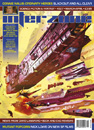
Interzone #227


Interzone #227 (March-April)
TTA Press


British magazine Interzone, which unlike its counterpart on the publisher Black Static, mainly focuses on horror and dark fantasy, specializes in science fiction, but does not hesitate to print fantasy.

Non-fiction part of the issue consists of book, DVD and film reviews, in my opinion, is weaker than non-fiction section of Black Static. Maybe it's the problem with that single issue, but it looks all pretty boring. Peter Tennant has some sort of depth and the extent, in Interzone, with all diversity, breathtaking polyphony does not arise.

With the stories all is much better. To failures - and at a stretch – there can be attributed only «Chimbwi» by Jim Hawkins, had once printed in New Worlds. Nice setting - Africans have learned to convert sunlight into electricity by 98%, but nobody told the secret, Europe and America are dying; black men are murdered around the world – was not turned into a cheerful story. An English professor hired by the people of Zimbabwe must participate in the construction of the second underground tunnel under Africa. He blames Africans in cruelty towards them, the Europeans, but Africans have an irrefutable answer: did you helped us in due time, when we were starving? The author immersing in African motifs did not benefited the action: instead, to make the hero look at the dying land, he forces him to play with the gods.

I have mixed feelings with the story by Nina Allan «Flying In The Face of God». Detail-written psychology of characters tries to win plot over to its side, leaving the story without intelligible plot and, consequently, any changes within the characters. Two women, Anita and Rachel, suffer from the fact that soon they will become separated: Rachel will fly to the stars, so her body she undergoes the necessarily procedure, so that parts of her body is transformed, as Anita will make a documentary about this story. It would be foolish to blame the lack of action to this women's drama (which in addition to that two friends have added to Anita`s mother and grandmother): it's not space opera, the title of the story still involves a flight. Besides the fact that the heroines yearn, think, talk to each other and read old letters, there is nothing more and nothing is assumed. But conflict in the end did not occur, so that all experiences and passions do not lead anywhere.

Chris Beckett takes in this issue sort of a joke: in his "Johnny`s New Job" the society judges employee of the Welfare, which overlooked a little girl - and she died. For that he will have to stake his life on, and possibly his child`s. The future of Britain's unenviable, but the writer smooths out the horror of the situation by satire and eccentric characters, and style compensates the expected ending.

Mercurio D. Rivera in his «Dance of the Kawkawroons» affects the theme of contact but avoids erased topics, translating it to another plane: greed and people's dependence on new technologies. Two astronauts on a planet meet with a specimen of another race, like a cockatoo, which just like the birds lay eggs. Because the eggs, which give a person superhuman capabilities, human beings kill the Kawkawroon and take the eggs. Drily written, but thoughtful story.

The opening story «The History of Poly-V» by John Ingold because of the title may not be immediately arouse interest, but actually turns out to be one of the gems. If any work addresses themes of memory, past and future, search for yourself - plus the important role played by drugs - that certainly Philip K. Dick comes to mind. So when with the reading «The History of Poly-V» - but if some writer could be compared to Dick, allowing his influence, it might be a good compliment to a writer. In the story a group of students by experiment ways find the new formula of the drug poly-V, and its effect is difficult to understand. It is difficult to the heroes to understand it too. They, to find out what is the effect, write in his diary all of his actions during the experiments with the drug. The reader will also need to write for understanding what is happening with the characters. The author did not immediately reveal all the secrets, and this story is very appealing.

Another gem in this issue is «The Glare and the Glow» by Steve Rasnic Tem. The author immediately offers an unusual combination: a story about the light bulbs narrated by the man who speak only with quotations and even thinks this way. Juicy and very skillfully written short story about what the darkness hides.

Perhaps, fiction part of Interzone looks more advantageous than the recently reviewed the Black Static issue one. Together they compliment each other.

Sunday, April 11, 2010

Ruby and the Stone Age Diet


Martin Millar
Ruby and the Stone Age Diet
(Soft Skull, 2010)

The unnamed narrator, who broke up with the girlfriend Sis, lives in the one or the other London squat with his friend Ruby. She told him that the cactus, left by Cis, should flower, and then, according to the book of myths, Cis should return to him forever. While he waits flowering cactus, his life is vain and irrational. He finds the most idiotic work that you have come, and he is abducted by aliens, he met on the street talking robots, writes songs for his group, searching for a drummer, and he is surrounded by gods and goddesses. In all of this is not clear whether it happens to him really, or he is just a great romancer (LSD in the novel is only on one page).

Millar, under the pseudonym Martin Scott once wrote fantasy series about Thraxas, under his real name writes phantasmagoric urban stories, and "Ruby" is one of them. But if poor language of novels about Thraxas is difficult to call positive point, then in this book deliberately simple language is ideally suited for the narrator. Young foolish Londoner seems barely to understand the world organization, and therefore when he writes songs invents goddess of electric guitar players, when he was left - the god of the broken hearts, when he is left alone - the powerful spirit Inka, when he goes to the museum - muse Clio, so that gods does not look like a game of paganism, but rather like the mind games. And in an already slim novel Millar inserts a series of stories, Ruby writes from time to time, trying to either disband number of pages, then draws parallels between the story's heroine, a werewolf girl Cynthia and Ruby: they are both independent, but vulnerable, both were left by their stupid men but they nevertheless continue to miss them, and both write: Ruby - the story about Cynthia, and Cynthia in turn vampire love poems.

Between the myths about robots and ghosts the author inserts the problems of unemployment, the lives of British squatters, suffering literary creation (Ruby rewrites for earnings stories from the tabloids and porno magazines) and the uncertainty in the personal lives of young people, but because of the neighborhood with all written buffoonery in the novel these themes look like as the laws book against the cap and clown nose, and they can not be taken seriously.

Millar confuses the reader with the title (the Stone Age diet is only episodic), but forgets about the plot: the action in the book is virtually absent, whirling around amorous melancholy protagonist, so the narrator cactus is growing faster than anything in the novel takes place. The only intrigue, which the author keeps to the end, but it seems that without even knowing about it – not even whether Cis comes back to the protagonist, but whether his friendship with Ruby becomes something more.

150 pages of the book which the author may well have put in the 4 words – fools can love, too.

Sunday, March 28, 2010

Wimbledon Green


Wimbledon Green by Seth
(Drawn and Qauterly)


Cartoonist Seth at the beginning of the book reveals itself: the book was written for fun, “the drawing is poor, the lettering shoddy, the page compositions and storytelling perfunctory”, and indeed the novel as a novel was not intended, and was only as set of sketchbooks. The author is cunning. In fact, the poor drawing and the shoddy lettering guess stylized 40-50s comics, and the abruptness plot resembles a good documentary movie - about the fact that madness is always possible, but to catch the madness and understand it is not so simple.

Wimbledon Green, as it is written on the cover, is the greatest comic book collector in the world. Reader will trace the way during which Green had become a collector, and at first watching for those Green years being funny young fat Green, then a daily routine of his life already in the status of the great collector. It's a mystery according to the laws of half a century ago pulp comics, in which one key element is disclosed on the first page: Green disappeared somewhere along with his huge collection, and no one knows what happened to him. Despite the seemingly partial loss of detective intrigue, you do follow the adventures of Fat Green, while still can enjoy reading.

Throughout the book, Green will be chasing the rare comic books, accompanied by his assistants, women in sunglasses and an enigmatic Hindu, and parallel to this not the last people in comics fandom will tell you what they have heard about the great collector, under any circumstances have met with him, and suppose he still lost. Such sketch inserts (one person - one page) perfectly play the role of fragments from the documentary, which could shoot about the disappearance of Green.
Special mention deserves one of the rare comic included in the collection of Wimbledon. "Fine and Dandy" is the story of two funny hoboes, thick and thin, whose sole mission in the life was to be free. And to be free for them means to be homeless. If you read the whole book with a smile on his face, then this sketch really make you laughing out loud.

It is not necessary, however, to think that the whole book is a story about the chase, written for fun and laughter (and laughter and fun are really there). "Wimbledon Green" is also about that everything changes (and need to change), everything goes, but something subtle is always with you. This subtle thing, perhaps, makes any person a little crazy. It is important to switch to the coin at the right time.

Black Static #15


Black Static #15
(TTA Press)


British magazine Black Static continues to print high quality stories, adding to the fiction section a solid non-fiction one. Book reviews by Peter Tennant have breadth and versatility, and the Tony Lee section about latest movie releases on DVD and Blu-ray wins over both the quality and quantity. A little frustrating thing is that a sufficient number of low-budget films mentioned in the review is only available for British film fans.

The main part of the magazine is fiction. 5 stories of different levels authors, from the already those who have a few published books, and those who have never before been published. The beginning of this issue is James Cooper with the brutal novelette «Eight Small Men» from his forthcoming book. The two brothers who had grown up (one of them is the narrator) are going after so many years to visit the house of his stepfather to remember that they have experienced many years ago. This "memory of the past" method does not add anything to the story but helps to set pauses in the right places in the strained narrative. Cooper is able to catch up with horror, accurate in psychology, he has a good style. Brutal-viscous prose is the meat, which makes the story tasty and juicy. However, the «Eight Small Men» is more naturalistic mainstream story than horror. The ending, only in which horror element does occur, is somewhat far-fetched, and eight small men - it is still deus ex machine. However, such turn does not disappoint. Everything defines the atmosphere and the tone. (Review of the coming out soon in Atomic Fez book by James Cooper «The Beautiful Red», which includes the «Eight Small Men», will be soon.)

«Maximum Darkness» by the newcomer Alan Scott Laney is not a bad sketch about the power of books over people and obsession. The author has the ability to construct the plot, write proper atmosphere, but the heroes of the story, the brother and the sister, are stilted to details, and the writer fails to draw on the story on the heroes, already not too original. This is a weak story by the author which later seems to be able to write better.

«Babylon's Burning» by Daniel Kaysen is a great example of humor and horror in one bottle (just horror and humor, not humorous horror). The elder brother who works in an office with doubtful activities related to witchcraft calls young one to the party. He was stubborn at first, but then, after learning about the opportunity to have sex with girls working in the company, agrees. With one of them, Evelyn, they look circus show with cutting off hands, but it is more terrible: hand cut off for real.
Kaysen mixes black humor, ancient curses, the elements of noir in the proportions that make the story is a good entertainment.

The ending of the issue is «Death By Water» by Sarah Singleton. Succeeding in creating an atmosphere of despair, the author seems to have forgotten to diversify the plot, making it a mere formality. Ian, who lost a year ago his wife, is looking for a medium that could give him a chance to have last talk with his wife. Ian should pass three mediums, each of them carefully and lovingly written out, eclipsing the narrator. However, except for throwing and suffering of the hero, we do not see more in the story. Ian would still be able to talk to his wife, but in the title there is the word “water” for a purpose - at the end of the story too much of it, so that the effect of neatly written out the characters and a dark embankment unfortunately washed away.

We should watch for further works by James Cooper and Daniel Kaysen.